The Fauci files remind us that research costs money - and that the institutions distributing it are vulnerable to ambition, politics and greed. A healthier system would protect dissenters and skeptics instead of trying to silence them.
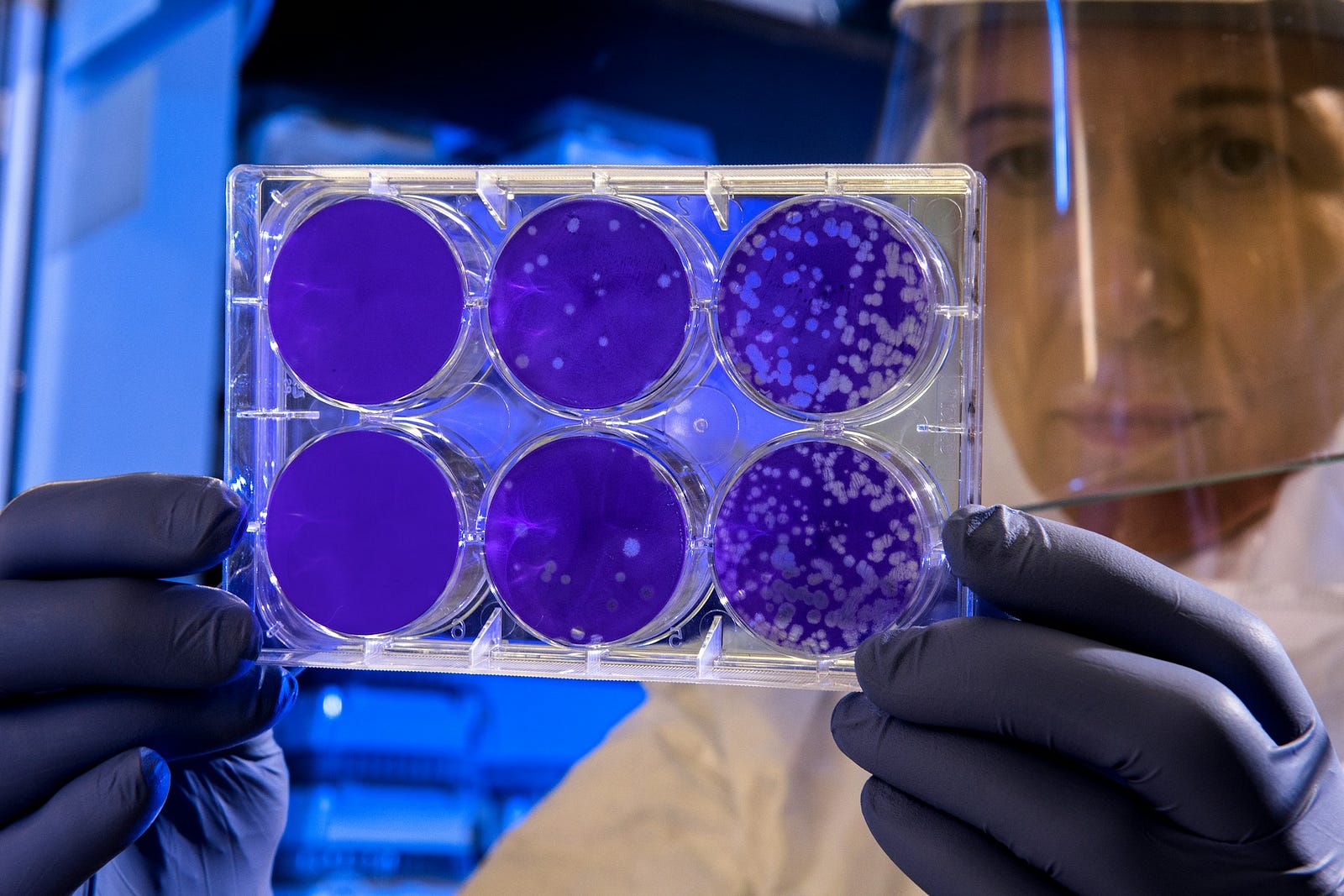
Science is frequently described as though it were a disembodied authority floating above ordinary human affairs.
“The science says” became one of the defining phrases of the COVID-19 pandemic. It implied that the relevant questions had been answered, the experts were united and continued disagreement was either ignorant or dangerous.
But science does not speak. Scientists do. So do bureaucrats, politicians, university administrators, pharmaceutical executives and journalists. All have interests, incentives and limitations.
Science is not free. It costs money — and lots of it. The National Institutes of Health alone distributed more than $40 billion for research in 2024. Those dollars do not allocate themselves. Human beings decide which diseases deserve attention, which researchers receive grants, which risks are acceptable and which unconventional ideas never reach a laboratory.
Those decisions may be informed by evidence, but they are not free from ambition, fashion, institutional loyalty or political pressure.
The Anthony Fauci files have made that uncomfortable reality harder to ignore. Diaries released by Sen. Rand Paul depict the former director of the National Institute of Allergy and Infectious Diseases as intensely conscious of his celebrity, press coverage and standing within the Biden administration. Fauci appeared to enjoy Democratic adulation while regarding skeptical Republican questioning as an annoyance.
Vanity does not invalidate laboratory results. Political opinions do not change a virus’s molecular structure.
But the files undermine the carefully cultivated image of Fauci as science personified. He was a powerful government official with political preferences, bureaucratic rivals and a keen awareness of his public reputation. When he famously suggested that attacks on him were attacks on science, he blurred the distinction between scientific inquiry and his own authority.
His subsequent appearance before the Senate Homeland Security Committee deepened the problem. Fauci repeatedly invoked the Fifth Amendment rather than answer questions about the pandemic response, government-funded coronavirus research and the origins of COVID-19. Invoking a constitutional right is not an admission of guilt. Yet after years of demanding trust from the public, his refusal to provide answers inevitably appeared evasive.
The larger failure was never simply about Fauci. It was the creation of a culture in which skepticism toward powerful scientific institutions was treated as hostility toward science itself.
During the pandemic, officials made decisions under terrible uncertainty. Some mistakes were inevitable. What was not inevitable was the effort to disguise uncertainty as consensus. The possibility of a laboratory accident was stigmatized long before sufficient evidence existed to dismiss it. Questions about school closures, natural immunity, vaccine side effects and the social costs of mandates were too frequently answered with censorship, ridicule or accusations of misinformation.
Some dissenters were wrong, of course. But that is not a justification for suppressing disagreement. A scientific system must be capable of distinguishing an unsupported claim from a politically inconvenient question.
The need for reform has become more urgent because America is no longer operating without serious competition. China is rapidly becoming a biotechnology superpower. Chinese companies now conduct almost one-third of the world’s clinical trials involving innovative drugs. They are supplying a growing percentage of the experimental compounds licensed by major pharmaceutical companies. China has also built enormous research parks and manufacturing facilities capable of moving discoveries from laboratories into production.
Meanwhile, American researchers can wait months for grants, lose much of their time to administrative work and spend their most creative years serving senior scientists who have mastered the funding system. The average age of recipients of major NIH grants has risen significantly. Peer-review panels tend to reward established researchers and proposals resembling work that has already succeeded.
The result is an incumbency tax on discovery. Scientists become skilled at proposing what committees are comfortable funding rather than pursuing what might transform their fields.
The White House report “Science: A New Golden Age,” prepared by science adviser Michael Kratsios, offers some promising alternatives. “Golden tickets” would allow an individual reviewer to support an unusual proposal even when a committee refuses to endorse it. Challenge prizes would reward scientists and companies for solving defined problems rather than navigating an approved process. Longer-term grants could give talented researchers enough independence to take genuine risks.
This does not require abolishing peer review or discarding regulation. Medical experiments, nuclear reactors and biological research can cause real harm. Oversight remains indispensable. But oversight should protect the public, not protect established institutions from competition or criticism.
Nor should government bureaucracy simply be replaced by corporate power. Pharmaceutical companies possess their own biases. They may favor treatments that can be patented, prescribed repeatedly and sold profitably. Chinese state investment carries still greater political and national-security complications. Every funding system influences which questions get asked.
That is precisely why no single institution should be permitted to define scientific truth.
America needs competing funding mechanisms, independent replication, transparent data and protections for researchers willing to challenge prevailing assumptions. Government agencies should disclose conflicts of interest and communications affecting public guidance. Scientific officials who influence national policy must answer congressional questions. Social-media companies should be extraordinarily reluctant to censor scientific debate at the government’s request.
Above all, officials must learn to say three words that were strangely scarce during the pandemic: We don’t know.
Science is not weakened by uncertainty. It begins with uncertainty. Its strength lies not in the infallibility of experts but in its capacity for testing, correction and revision.
A system that punishes dissent may produce the appearance of consensus. It may reassure politicians, funding agencies and the public for a time. But it also conceals mistakes until those mistakes become too large to ignore.
The lesson of the Fauci era should not be that experts are useless or that every contrarian is correct. It is that scientific authority, like every other form of authority, requires scrutiny. America will not reach a new golden age of discovery by replacing one unquestionable orthodoxy with another.
It will get there by funding bold ideas, demanding evidence, tolerating honest disagreement and remembering that skepticism is not the enemy of science.
It is one of science’s most essential tools.
(Contributing writer, Brooke Bell)